Food is more than something we prepare to satisfy hunger. It reflects culture, creativity, personal preferences, and changing lifestyles. Around the world, people are discovering new ingredients, experimenting with traditional recipes, and finding exciting ways to make everyday meals more enjoyable. Modern food trends bring these ideas together, offering inspiration for home cooks, food enthusiasts, and anyone interested in exploring different flavors.
From Justalittlebite Food Trends Jalbiteblog focuses on fresh food inspiration, creative combinations, nutritious choices, and popular dishes from different cultures. Understanding these developments can help people discover new recipes without completely changing their cooking routines. Whether you enjoy simple homemade meals or adventurous flavors, modern food ideas offer plenty of opportunities to make your dining experience more interesting.
1. Understanding Food Trends From Justalittlebite
What Are Modern Food Trends?
Modern food trends are changing preferences, ingredients, cooking techniques, and dining habits that influence what people prepare and enjoy. Some trends introduce unfamiliar ingredients, while others give traditional dishes a fresh presentation. Plant-based meals, colorful grain bowls, fermented foods, creative street food, and international flavors are examples of ideas that have gained attention.
These trends can develop through cultural exchange, restaurant creativity, changing consumer interests, and online food communities. However, not every popular dish needs to become part of everyone’s routine. The most useful trends are those that match individual tastes, budgets, and cooking habits.
How Food Trends Influence Everyday Eating
Food trends can influence everyday meals by introducing new ingredients and encouraging people to experiment. Someone who usually prepares a basic vegetable salad might discover roasted chickpeas, fresh herbs, citrus dressing, or toasted seeds as interesting additions. A familiar breakfast can become more varied with yogurt bowls, whole-grain toast, or seasonal fruit.
These changes do not require complicated recipes or expensive equipment. Small adjustments can introduce different textures and flavors while keeping meals practical. Food trends also encourage people to explore ingredients they may have overlooked, making everyday cooking more flexible.
The Growing Popularity of Creative Food Ideas
Creative food ideas are becoming popular because people enjoy discovering dishes that look appealing and offer distinctive flavors. Home cooks often experiment with colorful ingredients, unusual sauces, and different cooking methods to give familiar recipes a personal touch.
Another reason for this interest is the growing availability of cooking inspiration online. Recipe videos, food blogs, and photography introduce audiences to dishes from different regions. People can discover an idea, adjust it using available ingredients, and create their own version at home.
2. Popular Food Trends on Jalbiteblog
Trending Dishes People Love
Many popular food trends combine convenience, flavor, and visual appeal. Grain bowls, loaded sandwiches, homemade wraps, colorful salads, and creative pasta dishes are examples of meals that can be adapted to different preferences. They allow cooks to combine several ingredients without following complicated preparation methods.
Another popular direction is customizable food. A bowl of rice, for example, can be served with roasted vegetables, beans, grilled chicken, herbs, and a sauce of choice. Each person can adjust the ingredients according to their preferences, making the dish suitable for different tastes.
New Flavors and Exciting Food Combinations
Experimenting with flavor combinations is one of the most enjoyable parts of modern cooking. Sweet and spicy ingredients can create an interesting contrast, while creamy textures often work well with crisp vegetables or toasted toppings. Citrus juice can brighten rich dishes, and fresh herbs can add fragrance to simple meals.
For example, mango with chili and lime creates a lively combination, while roasted vegetables with garlic yogurt offer a balance of sweetness and creaminess. Combining familiar ingredients in unexpected ways can make ordinary recipes feel fresh without requiring specialist cooking skills.
Social Media’s Influence on Food Choices
Social media has become an important source of food inspiration. Short cooking videos, recipe photographs, and food discussions allow people to discover dishes that may not be common in their local communities. A simple recipe can attract attention when its preparation is easy to follow or its presentation is distinctive.
However, online popularity does not always indicate nutritional value, affordability, or practicality. Some recipes may use ingredients that are difficult to find or require more preparation than expected. It is helpful to consider the complete recipe rather than judging a dish only by its appearance.
3. Fresh Ingredients and Seasonal Flavors
Using Fresh Fruits and Vegetables
Fresh fruits and vegetables bring natural color, texture, and variety to everyday meals. Apples, berries, citrus fruits, tomatoes, leafy greens, carrots, peppers, and seasonal produce can be used in countless recipes. Choosing ingredients that are in season may also provide better availability and value.
Seasonal produce can inspire different meals throughout the year. Fresh summer fruits work well in chilled desserts and breakfast bowls, while winter vegetables can be roasted, added to soups, or prepared in warming side dishes. Using a variety of produce helps keep meals interesting and introduces different nutrients.
Exploring Herbs, Spices, and Natural Flavors
Herbs and spices can transform a recipe without requiring major changes to its main ingredients. Basil, coriander, mint, parsley, rosemary, cumin, paprika, turmeric, and black pepper each bring distinctive characteristics to food.
Fresh mint can brighten a fruit salad, while cumin and paprika can add depth to roasted vegetables or beans. Garlic, ginger, lemon, and chili are also useful ingredients for creating flavorful sauces and marinades. Learning how different seasonings work together makes it easier to develop dishes that suit personal preferences.
Creative Ways to Combine Ingredients
Creative ingredient combinations allow home cooks to make the most of what they already have. Roasted sweet potatoes can be paired with chickpeas and leafy greens, while strawberries can add a refreshing contrast to a spinach salad. Rice, vegetables, herbs, and a homemade dressing can become a satisfying lunch bowl.
Texture is just as important as flavor. Crunchy seeds, toasted nuts, crisp vegetables, and creamy sauces can make a dish more enjoyable. Rather than adding many unrelated ingredients, choose a few elements that complement one another.
4. Healthy Food Trends and Nutritious Choices
Plant-Based Meals and Alternatives
Plant-based meals have become an important part of modern food culture. They feature ingredients such as beans, lentils, chickpeas, tofu, vegetables, nuts, seeds, and whole grains. These foods can be used to prepare satisfying meals with a wide range of flavors.
A lentil curry, chickpea wrap, vegetable stir-fry, or bean salad can provide variety without relying on meat. People who prefer to include animal products can also combine plant-based ingredients with eggs, fish, chicken, or dairy foods. The goal is to explore different meal possibilities while considering individual nutritional needs.
Balanced Meals With Natural Ingredients
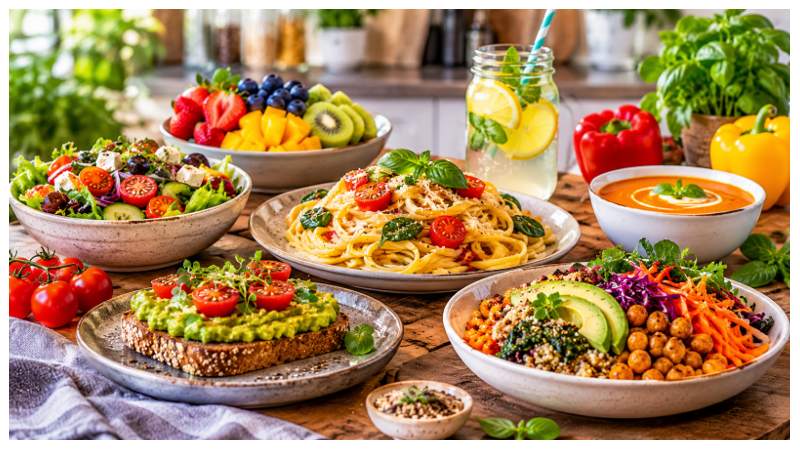
A balanced meal generally includes a suitable combination of vegetables or fruits, protein sources, whole grains or other carbohydrates, and healthy fats. Examples include grilled chicken with brown rice and vegetables, lentils with whole-grain flatbread, or a grain bowl containing beans, avocado, and fresh greens.
Different foods provide different nutrients, so variety matters. Whole grains, vegetables, fruits, legumes, dairy products, nuts, and protein-rich foods can all contribute to an enjoyable eating pattern. Portion sizes and ingredient choices can be adjusted according to personal needs and preferences.
Making Healthy Eating More Enjoyable
Nutritious food does not need to be plain or repetitive. Herbs, spices, colorful vegetables, flavorful dressings, and different cooking methods can make healthy meals more appealing. Roasting vegetables brings out their natural sweetness, while grilling can add a smoky flavor to suitable ingredients.
Presentation can also improve the eating experience. A bowl containing several colors, textures, and fresh toppings may feel more inviting than a meal made from ingredients prepared in exactly the same way every day. Exploring new recipes can make balanced eating easier to maintain.
5. Global Cuisine and Cultural Food Inspiration
Popular International Dishes
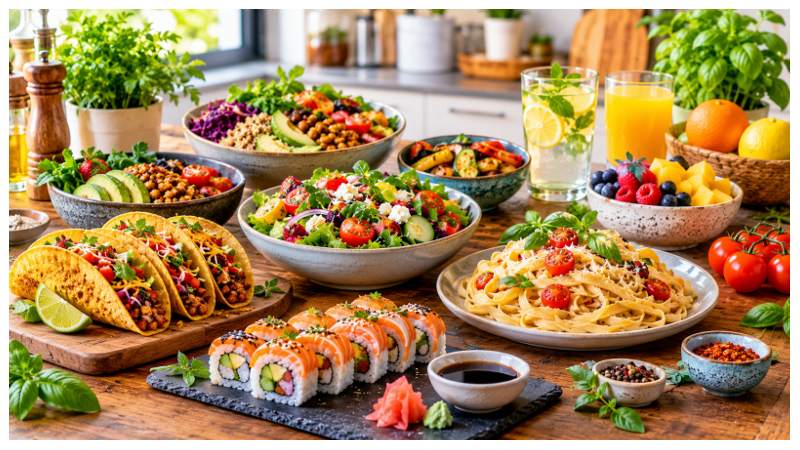
International cuisine offers a wide range of ingredients, preparation styles, and flavor combinations. Italian pasta, Japanese sushi, Mexican tacos, Indian curries, Middle Eastern hummus, and Mediterranean salads are examples of dishes enjoyed across different parts of the world.
Exploring these foods introduces home cooks to new cooking techniques and ingredients. Some dishes can be prepared using locally available alternatives, allowing people to enjoy international inspiration without needing every traditional ingredient.
Exploring Different Culinary Traditions
Every food culture has its own traditions shaped by geography, climate, history, and local agriculture. Rice-based meals are important in many Asian cuisines, while Mediterranean cooking often features vegetables, olive oil, legumes, herbs, and grains. South Asian dishes frequently use layered spices, while many Latin American recipes highlight corn, beans, chilies, and fresh sauces.
Learning about these traditions helps people appreciate the background of different dishes. It also encourages respectful exploration rather than treating cultural recipes as simple trends. Understanding traditional ingredients and preparation methods can make cooking more meaningful.
Traditional Recipes With a Modern Twist
Traditional recipes can be updated while keeping their recognizable character. A classic vegetable curry might be served with roasted chickpeas, while homemade flatbread could be filled with fresh salad and a flavorful yogurt sauce. Traditional soups can also be presented with new toppings, herbs, or grains.
The key is to preserve the qualities that make a dish special while introducing thoughtful changes. Modern presentation, alternative ingredients, or different serving styles can give familiar recipes a fresh appearance without losing their original appeal.
6. Creative Recipes and Everyday Food Ideas
Quick Breakfast Inspirations
Breakfast can be simple while still offering variety. Overnight oats with fruit, yogurt topped with nuts, vegetable omelets, whole-grain toast with avocado, and homemade smoothies are practical options for busy mornings.
Preparing some ingredients in advance can make breakfast easier. Chopped fruit, boiled eggs, washed vegetables, or overnight oats can be stored appropriately so that less preparation is needed when the day begins. Changing toppings and combinations throughout the week also prevents breakfast from becoming repetitive.
Easy Lunch and Dinner Recipes
Lunch and dinner are good opportunities to experiment with different ingredients. Vegetable rice bowls, lentil soup, grilled chicken wraps, chickpea salads, pasta with seasonal vegetables, and homemade sandwiches can all be adjusted to suit available ingredients.
For convenient cooking, prepare basic components such as cooked grains, roasted vegetables, beans, and sauces ahead of time. These ingredients can be combined in different ways, saving preparation time while allowing meals to have different flavors.
Tasty Snacks and Refreshing Drinks
Snacks can add variety between meals. Fresh fruit, roasted chickpeas, yogurt, homemade popcorn, vegetable sticks with hummus, and small sandwiches are useful options. Choosing ingredients with different textures can make simple snacks more satisfying.
Refreshing drinks can also be prepared at home. Lemon and mint water, fruit smoothies, iced herbal tea, and homemade fruit drinks offer alternatives to heavily sweetened beverages. Fresh ingredients provide natural flavor, while the amount of added sugar can be controlled according to personal taste.
7. Street Food and Fusion Food Trends
Popular Street Food Ideas
Street food is popular because it offers convenient servings, bold flavors, and dishes that often reflect local culinary traditions. Tacos, stuffed flatbreads, grilled corn, savory pancakes, kebabs, noodle dishes, and filled sandwiches are enjoyed in many regions.
Home cooks can take inspiration from these foods by preparing their own sauces, fillings, and toppings. Homemade versions also make it easier to adjust spice levels, ingredients, and portion sizes. Street food inspiration can bring variety to casual lunches, family gatherings, and weekend meals.
Mixing Flavors From Different Cultures
Fusion food combines ingredients or cooking influences from different culinary traditions. A familiar example might be a taco filled with spiced paneer, or a rice bowl topped with Mediterranean vegetables and a yogurt-based sauce. These combinations can introduce interesting flavors while keeping preparation manageable.
Successful fusion cooking requires balance. Strong spices, sauces, and textures should complement one another instead of competing. Start with a familiar dish, introduce one or two ingredients from another cuisine, and adjust the seasoning until the flavors work together.
Modern Twists on Classic Favorites
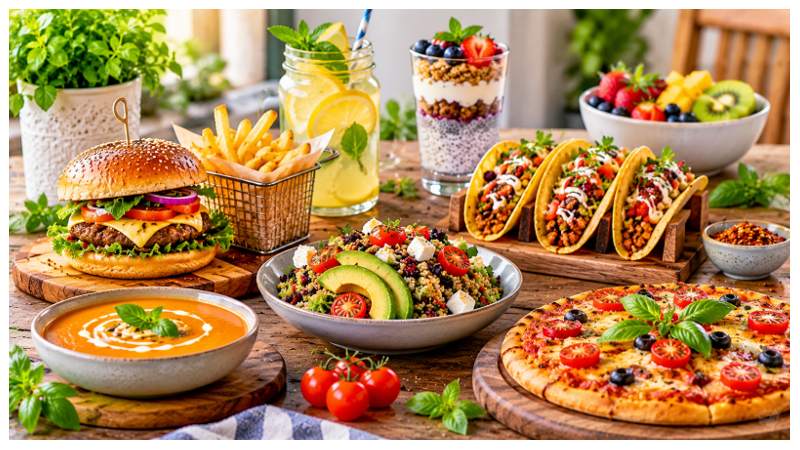
Classic favorites can be refreshed through small changes in ingredients or presentation. A traditional sandwich might receive a new filling, while homemade pizza can feature seasonal vegetables and fresh herbs. A familiar noodle dish can be served with a different sauce or additional crunchy toppings.
These updates allow people to enjoy recognizable foods in new ways. They are also useful when cooking for different preferences because the main recipe can remain familiar while individual toppings or fillings are customized.
8. Sustainable and Mindful Food Choices
Reducing Food Waste in the Kitchen
Reducing food waste is an important part of thoughtful cooking. Planning meals before shopping helps prevent unnecessary purchases, while storing ingredients correctly can keep them usable for longer. Leftover vegetables can become soup, cooked rice can be used in another meal, and extra fruit can be added to smoothies.
It is also helpful to understand the difference between quality dates and safety instructions on food packaging. Check ingredients carefully, store food at appropriate temperatures, and discard anything that appears spoiled or unsafe.
Choosing Seasonal and Local Ingredients
Seasonal and locally available ingredients can make shopping more practical. Produce grown nearby may be easier to find, and buying according to the season can offer useful variety throughout the year. Local markets can also introduce shoppers to vegetables, fruits, grains, and herbs that they may not regularly use.
Choosing local ingredients does not mean every meal must follow a strict rule. Instead, it offers another way to make food decisions based on availability, freshness, cost, and personal preference.
Making More Thoughtful Food Decisions
Mindful food choices involve considering how ingredients are purchased, prepared, stored, and consumed. This may include comparing packaging, choosing suitable portions, using leftovers, and selecting foods that fit household needs.
It is not necessary to change every shopping habit at once. Small actions, such as preparing a shopping list or using ingredients before purchasing more, can make a practical difference over time. Thoughtful decisions can also help households manage food budgets.
9. How to Follow Food Trends at Home
Finding Inspiration From Jalbiteblog
Food blogs such as Jalbiteblog can provide inspiration for discovering new dishes, exploring ingredients, and learning about changing food interests. Recipe collections and food articles can help readers identify ideas that suit their cooking experience and available resources.
When exploring a new recipe, review the ingredients and preparation steps before starting. Consider whether the dish requires special equipment or ingredients that may be difficult to find. This makes it easier to choose recipes that are realistic for everyday cooking.
Experimenting With New Recipes
Trying new recipes is a practical way to develop cooking skills. Begin with dishes that use familiar ingredients, then gradually introduce new spices, sauces, vegetables, or preparation methods. Following a recipe carefully at first can help you understand how its ingredients work together.
Once you become comfortable with the method, adjust the seasoning, toppings, or ingredient quantities to match your preferences. Keeping notes about successful combinations can also help you recreate favorite dishes later.
Adapting Trends to Your Personal Taste
Not every food trend will suit every household. Some dishes may be too spicy, expensive, time-consuming, or different from familiar eating habits. There is no need to follow a trend simply because it is popular online.
Choose the elements that genuinely interest you and adapt them to your routine. You might enjoy a new sauce but prefer your usual vegetables, or try an international recipe using ingredients available at your local market. Personalizing food ideas makes cooking more enjoyable and sustainable.
10. Final Thoughts
Enjoying New Flavors With From Justalittlebite Food Trends Jalbiteblog
Modern food trends offer endless opportunities to explore fresh ingredients, discover international dishes, experiment with creative combinations, and make everyday meals more interesting. From nutritious plant-based recipes to colorful street food and seasonal cooking, each idea can provide inspiration for a different dining experience.
From Justalittlebite Food Trends Jalbiteblog encourages readers to approach food with curiosity while keeping their choices practical and personal. You do not need expensive ingredients or complicated techniques to enjoy something new. Start with a familiar recipe, introduce a fresh flavor, or explore a dish from another culture. Small culinary discoveries can bring greater variety to your kitchen and make everyday cooking a rewarding experience.